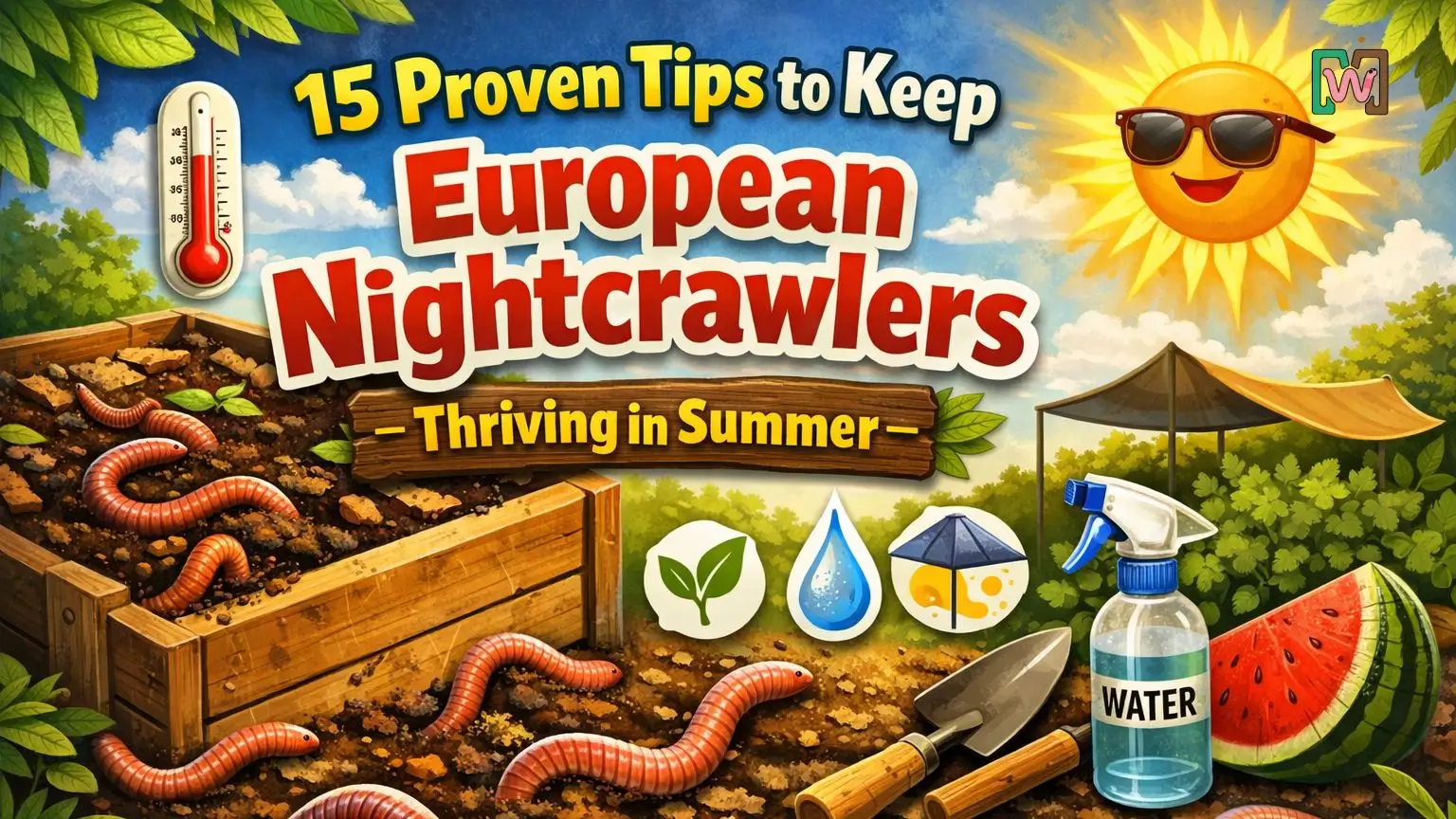
European nightcrawlers are one of the most popular composting worms due to their adaptability, size, and ability to break down organic matter efficiently. However, summer can be a challenging season for worm composters. Rising temperatures, dry conditions, and poor ventilation can quickly turn a healthy worm bin into a stressful environment.
If not managed properly, excessive heat can slow down reproduction, reduce feeding activity, and even cause worm die-offs. The good news is that with the right techniques, you can easily protect your European nightcrawlers and keep your composting system productive throughout the hottest months.
Below are 15 proven tips to help your worms stay cool, healthy, and active during summer.
1. Keep Your Worm Bin in a Cool, Shaded Area
The most important step in summer worm care is location. Direct sunlight can rapidly heat your bin, making it dangerous for worms. Always place your worm bin in a shaded spot such as under a tree, inside a garage, basement, or a covered balcony.
2. Maintain an Ideal Temperature Range
European nightcrawlers thrive best between 15°C and 25°C (59°F–77°F). Once temperatures exceed 30°C (86°F), worms become stressed and may try to escape. Use a thermometer to monitor internal bin temperature regularly.
3. Keep Bedding Moist but Not Soggy
Moisture plays a key role in temperature control. Bedding should feel like a wrung-out sponge—moist but not dripping. Dry bedding heats up faster, while overly wet bedding can reduce oxygen levels.
Must Read : European Nightcrawlers Escaping? What Their Behavior Is Telling You
4. Feed Smaller Quantities More Frequently
Overfeeding in summer can lead to rapid decomposition, which produces heat. Instead of adding large amounts of food at once, feed your worms small portions more frequently to prevent overheating.
5. Use Frozen Food Scraps
One of the simplest cooling techniques is adding frozen fruit and vegetable scraps. As they thaw, they gradually cool the surrounding bedding, helping regulate the bin’s temperature.
6. Add Ice Packs or Frozen Bottles
Placing a frozen water bottle or ice pack on top of the bedding can provide temporary cooling during extremely hot days. This method is especially useful during heatwaves.
7. Improve Airflow and Ventilation
Proper airflow is essential to prevent heat buildup. Ensure your bin has enough ventilation holes. You can also gently fluff the bedding occasionally to improve oxygen circulation.
8. Choose Light-Colored Containers
Dark-colored bins absorb more heat from sunlight. Switching to light-colored or reflective bins can significantly reduce temperature buildup.
9. Add More Carbon-Rich Bedding
Materials like shredded cardboard, newspaper, coco coir, and dry leaves help balance moisture and reduce heating caused by nitrogen-rich food waste. A good carbon-to-nitrogen ratio keeps your bin stable.
10. Bury Food Scraps Deep
Always bury food scraps at least a few inches below the surface. This helps prevent heat concentration at the top and reduces the chances of attracting pests like fruit flies.
11. Monitor Your Bin Daily During Heatwaves
Summer temperatures can fluctuate quickly. Make it a habit to check your worm bin daily during extreme heat. Watch for signs like worms trying to escape, strong odors, or clumping.
12. Use a Damp Cover
Covering your bin with a damp cloth, burlap sack, or newspaper helps retain moisture and keeps the surface cool. This also prevents the top layer from drying out.
13. Slightly Open the Lid for Heat Release
If your bin is secure from pests, keeping the lid slightly open can help release trapped heat. Just ensure that moisture levels remain balanced.
Must Read : How Fast Do European Nightcrawlers Reproduce?
14. Avoid Compacting the Bedding
Compacted bedding restricts airflow and traps heat. Keep the bedding loose and fluffy so air can circulate freely and maintain a stable environment.
15. Harvest Compost Regularly
Finished compost can trap heat within the bin. Regular harvesting not only gives you fresh vermicompost but also creates space for better airflow and cooling.
Final Thoughts
Keeping European nightcrawlers healthy during summer is all about temperature control, moisture balance, and proper feeding habits. Even small changes—like improving airflow or adjusting feeding frequency—can make a big difference.
By applying these 15 tips, you can ensure that your worms remain productive, continue composting efficiently, and even reproduce successfully despite the heat. A well-maintained worm bin doesn’t just survive summer—it thrives.