Table of Contents
Hi, I am Samantha Flowers, and I have been raising red wigglers for years. One thing I learned pretty fast is that temperature is everything when it comes to keeping your worms happy. If your bin gets too hot or too cold, your worms slow down, try to escape, or even die. That is not fun for anyone, especially the worms.
So today I want to walk you through exactly what temperatures work best for red wigglers, what to watch out for, and how to fix things when the temperature goes wrong. Whether you are just starting out or you have had a worm bin for a while, this guide is going to help you a lot.
What Are Red Wigglers and Why Does Temperature Matter So Much?
Red wigglers, known by their scientific name Eisenia fetida, are the little heroes of composting. They eat your kitchen scraps and turn them into rich, dark compost called worm castings. Those castings are amazing for your garden.
But here is the thing. Red wigglers are not like plants that just sit there. They are living creatures with very specific needs. And temperature is one of the biggest needs of all.
If you are new to all of this, our red wigglers complete composting guide is a great place to start before diving into temperature management.
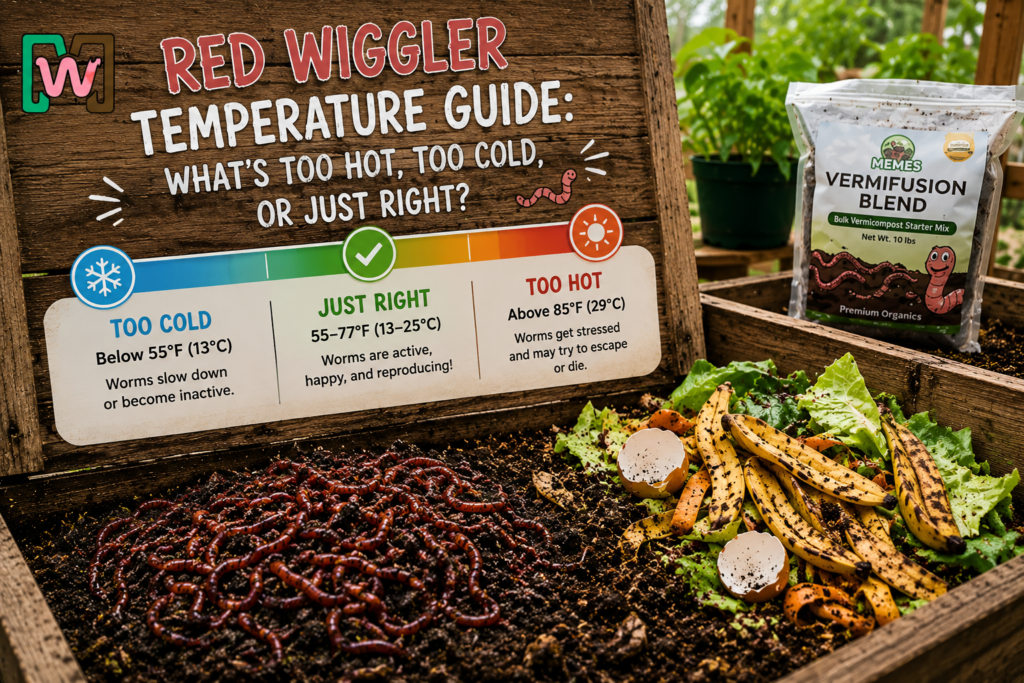
Red wiggler worms do best between 55 degrees Fahrenheit and 77 degrees Fahrenheit. Peak composting and reproduction happen between 71 and 89 degrees Fahrenheit. When the temperature falls outside of that range, your worms start to struggle. They eat less, reproduce less, and in really bad cases, they leave the bin or die.
I always say, think of your worm bin like a home. You want to keep the inside comfortable, no matter what the weather outside is doing.
The Just Right Zone: 55 to 77 Degrees Fahrenheit
Red wigglers are perfectly happy and productive in temperatures ranging from 55 degrees Fahrenheit to 77 degrees Fahrenheit. This is what I call the sweet spot. Inside this range, your worms are eating, moving around, breaking down food, and making babies.
A simple way to remember this is that composting worms like the same temperatures that we do. If you go to your worm bin and you feel cold, so do your worms. If you feel hot, so do they.
That little tip has helped me more times than I can count. On a really hot summer day, I feel uncomfortable outside, so I know my worm bin outside is also getting too warm. That is my signal to move things around or cool the bin down.
Inside this comfortable range, a few great things happen:
Your worms eat their body weight in food every single day. To understand exactly how much red wigglers eat and how feeding connects to bin health, that post breaks it all down. They reproduce quickly, growing your worm population.
Your worms eat their body weight in food every single day. They reproduce quickly, growing your worm population. They produce rich worm castings that are full of good stuff for your garden. Everything just runs smoothly.
This is the range you always want to aim for with your Memes Worms red wigglers.
Too Cold: What Happens Below 55 Degrees Fahrenheit
Cold temperatures are one of the most common problems for worm farmers, especially during fall and winter months.
Below 50 degrees Fahrenheit, red wigglers feed less and become much less active. Think of it like they are getting sleepy. They do not want to eat much, they slow way down, and your composting process almost stops.
Below 50 degrees Fahrenheit, worms become sluggish and consume less food, which slows the composting process significantly.
Now, cold does not immediately kill red wigglers. They are tougher than you think. Red wigglers will survive, although maybe not thrive, in temperatures well below 50 degrees Fahrenheit. Their cocoons are famously hardy as well, able to withstand prolonged freezing temperatures, staying viable in a suspended state until they are able to hatch in warmer weather.
If you want to understand the full picture of how red wigglers are born and grow, the red wiggler life cycle post explains it beautifully.
But surviving is not the same as thriving. If you want your Memes Worms red wigglers producing beautiful castings all year long, you need to keep them warm enough to stay active.
Here is what I watch for when it starts getting cold:
Worms moving to the bottom of the bin away from the cold surface. Less food being eaten than usual. Worms clustering together in the center of the bin for warmth.
If I notice any of these signs, I know it is time to warm things up. You can also cross-check with signs your worms are healthy to make sure the cold has not already set things back.
Too Hot: What Happens Above 84 to 90 Degrees Fahrenheit
Heat is actually more dangerous to red wigglers than cold, and it can cause problems much faster.
Bedding with a temperature above 84 degrees Fahrenheit is harmful and sometimes fatal to red wiggler populations.
If the worm bin temperature rises over 80 degrees Fahrenheit, the worms will start to eat and reproduce less. If it gets over 95 degrees Fahrenheit, composting worms will either start to die or will attempt a mass exit from the bin.
If the worm bin temperature rises over 80 degrees Fahrenheit, the worms will start to eat and reproduce less. If it gets over 95 degrees Fahrenheit, composting worms will either start to die or will attempt a mass exit from the bin.
A mass exit is exactly what it sounds like. All your worms try to escape at once. I have heard horror stories from other worm farmers who woke up to find hundreds of worms on the floor around their bin. That is a really bad day.
If you want to understand more about why worms escape and what their behavior is telling you, this post on European nightcrawlers escaping covers a lot of the same behavioral signals that apply to red wigglers too.
Excessive heat above 90 degrees Fahrenheit can stress the worms, leading to dehydration and potential death.
Heat can come from two places. The first is outside air temperature, like on a hot summer day. The second one surprises a lot of beginners. If you add too much food scraps to a large worm bin, it will become a hot compost pile and create its own heat, which can cook your worms from the inside out.
So overfeeding is not just a waste of food. It can actually heat up your bin and harm your worms. I always feed my Memes Worms red wigglers in smaller amounts and check the bin temperature before adding more.
If your worms have already slowed down on eating, this post on red wigglers not eating will help you figure out what is going on.
Signs your bin is getting too hot:
Worms crawling up the walls or trying to get out. A very strong, unpleasant smell from the bin. Worms moving slowly or looking stressed near the top of the bedding.
Danger Zone: Below 32 and Above 95 Degrees Fahrenheit
These are the extremes you really want to avoid.
At freezing temperatures, the water in the bin can actually freeze, and worms that are caught in that freeze will not survive. However, as I mentioned, their egg cocoons can survive freezing. So even if you lose adult worms to a hard freeze, you may still see baby worms hatching once things warm up. This also connects to how fast red wigglers reproduce — a recovering bin can bounce back faster than you expect once conditions improve.
Above 95 degrees Fahrenheit is an emergency situation for your bin. At that point, you need to act fast to cool things down or move your worms to a safer location.
How to Keep Your Worm Bin at the Right Temperature
This is the part I really enjoy talking about because there are so many simple things you can do.
1. Keep the Bin Indoors:
The single easiest solution. I keep my Mimes Worms bin in my basement because the temperature there stays pretty steady year round. A basement, garage, or even under the kitchen sink works great. Before moving or setting up a bin indoors, it also helps to know how to prepare your worm bin before adding worms so the environment is already stable when your worms arrive.
2. Use Insulation in Cold Weather:
You can use blankets, old towels, or straw around the bin to provide insulation. This method works well in both cold and hot climates. I have used old burlap sacks and even a thick piece of cardboard wrapped around the bin on really cold nights.
3. Try a Seedling Heat Mat in Winter:
Seed heating mats placed under your worm bin can help maintain warmth during colder months. Be sure to monitor the temperature closely to avoid overheating. These are cheap and easy to find at most garden stores or online.
4. Add More Bedding in Cold Weather:
A thicker layer of bedding material like shredded newspaper or coconut coir acts as insulation. It traps warmth inside the bin and keeps your worms comfortable.
5. Shade and Ventilation in Hot Weather:
In summer, move your outdoor bin to a shaded spot. Never put it in direct sunlight. Proper ventilation helps regulate temperature and moisture levels, preventing overheating. I also wet the bedding with cool water on really hot days. It helps bring the temperature down fast.
6. Use a Compost Thermometer:
Purchase a simple compost thermometer so you can accurately monitor the temperature inside your worm composting bin. This is one of the best investments I ever made for my worm farming setup. You measure the inside of the bin, not the outside air, because those numbers can be very different.
Moisture and Temperature Work Together
I want to mention something that a lot of guides skip over. Temperature and moisture are connected. When your bin gets too hot, it also dries out faster. And dry bedding is really bad for red wigglers because they breathe through their skin and need moisture to survive.
Composting worms prefer around 80 to 90 percent water content in their bedding material. You can always add water or bedding material to adjust the moisture level.
So when the temperature goes up, check your moisture levels too. If the bedding feels dry, add a little water. If it feels soggy, add more dry bedding. Keeping both temperature and moisture balanced is the key to a thriving bin.
Recommended Products to Support Your Worm Bin
If you are keeping Memes Worms red wigglers, here are a few things that will make temperature management much easier:
Memes Worms Red Wigglers – Start with healthy, active worms from a trusted source. Healthy worms handle temperature swings much better than stressed or weak ones.
Compost Thermometer – A basic compost or soil thermometer lets you check bin temperature in seconds. Always measure inside the bedding, not just the surrounding air.
Seedling Heat Mat – Perfect for keeping your bin warm during winter months. Look for ones with a thermostat so you can set an exact temperature.
Coconut Coir Bedding Blocks – Coconut coir holds moisture well and adds insulation to your bin. It is one of my favorite bedding materials for temperature management.
Worm Bin with Ventilation Holes – A good bin has proper air flow built in. This helps with both heat control in summer and moisture regulation year round.
Burlap or Old Towels for Wrapping – Free or very cheap insulation for cold winter nights. Just wrap them around the outside of your bin.
Final Thoughts
Keeping your red wigglers at the right temperature is honestly one of the most important things you can do as a worm farmer. Red wiggler worms tolerate a range of 40 degrees Fahrenheit to 90 degrees Fahrenheit, but they do best between 55 and 77 degrees Fahrenheit. Stay inside that range as much as you can, and your worms will reward you with rich, beautiful castings all year long.
It does not take fancy equipment or a lot of money. A good thermometer, some basic insulation, and a little attention is all you really need.
At Mimi’s Worms, we carry quality red wigglers and everything you need to set up a healthy, thriving bin. Whether you are just getting started or fine-tuning a bin you already have, the most important thing is that you start. Worm composting is one of the most rewarding things I have ever done for my garden, and I know it will be for you too.
If you want to keep learning, check out all of our tips on the blogs page or read more about Samantha Flowers and why she started this journey.
Pure Red Wiggler Composting Worms For Sale
Transform your food scraps and yard waste into rich, organic compost with Red Wiggler Composting Worms – Eisenia Andrei for Vermicomposting, Soil Health, and Organic Gardening. ALSO KNOWN AS CALIFORNIA RED Composting WORMS. These hardworking worms are nature’s composters, ideal for converting organic matter into nutrient-dense worm castings (also known as black gold). Perfect for home composters, gardeners, educators, and eco-conscious households.
Living Material + Red Wiggler Composting Worms Eisenia andrei
What to expect when buying Red Wigglers in Living Material: You’ll receive a 10×8×6 box containing a balanced composting blend of Eisenia andrei composting worms, nutrient-rich castings, and naturally active material (including cocoons and beneficial microbes).
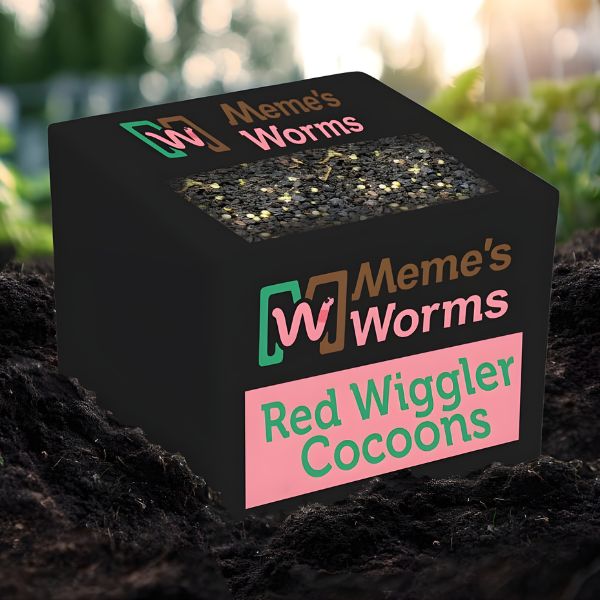
Pure Red Wigglers Worm Cocoons - Composting Worms Eisenia Fetida
Our Worm Cocoons (Eisenia fetida) are a simple, reliable, and eco-friendly way to start or expand your composting setup. Each order includes cocoons embedded in rich, biologically active material to preserve freshness and composting potential during transport.
People Also Ask:
1. What is the ideal temperature for red wigglers?
Red wigglers perform best when their bedding stays between 55°F and 77°F (13°C to 25°C). Within this range, they remain active, consume food efficiently, reproduce regularly, and produce high-quality worm castings. Many worm keepers find that temperatures around 65°F to 75°F provide the most consistent results.
2. How cold is too cold for red wigglers?
When temperatures drop below 50°F (10°C), red wigglers become less active and eat less food. Extended exposure to freezing conditions can kill adult worms, although their cocoons can often survive and hatch when temperatures warm up again. Insulation or moving the bin indoors can help protect your worms during winter.
3. How hot is too hot for red wigglers?
Temperatures above 84°F (29°C) can stress red wigglers and reduce feeding and reproduction. If bedding temperatures approach 90°F, conditions become increasingly dangerous. At 95°F (35°C) or higher, worms may attempt to escape the bin or suffer significant mortality if temperatures remain elevated.
4. How can I tell if my worm bin temperature is causing problems?
Common signs of temperature stress include worms trying to crawl out of the bin, reduced food consumption, clustering in one area, sluggish movement, and unpleasant odors from the bedding. A compost thermometer is the easiest way to confirm whether temperature is contributing to these issues.
5. What is the best way to keep a worm bin at a stable temperature?
Keep the bin in a location with relatively stable temperatures, such as a basement, garage, or utility room. During cold weather, use extra bedding and insulation. During hot weather, provide shade, good ventilation, and adequate moisture. Regularly checking the bedding temperature with a thermometer helps prevent problems before they affect your worms.

Samantha Flowers
Hi, I’m Samantha aka Meme, founder of Meme’s Worms, a commercial worm farm based in Valdosta, Georgia. I’m a hands-on worm farmer, educator, and business owner who has spent years raising, harvesting, and shipping Red Wigglers, European Nightcrawlers, and composting worms to gardeners, homesteaders, educators, and commercial growers across the United States. Everything I teach and write about here is based on real-world experience, not theory. View More