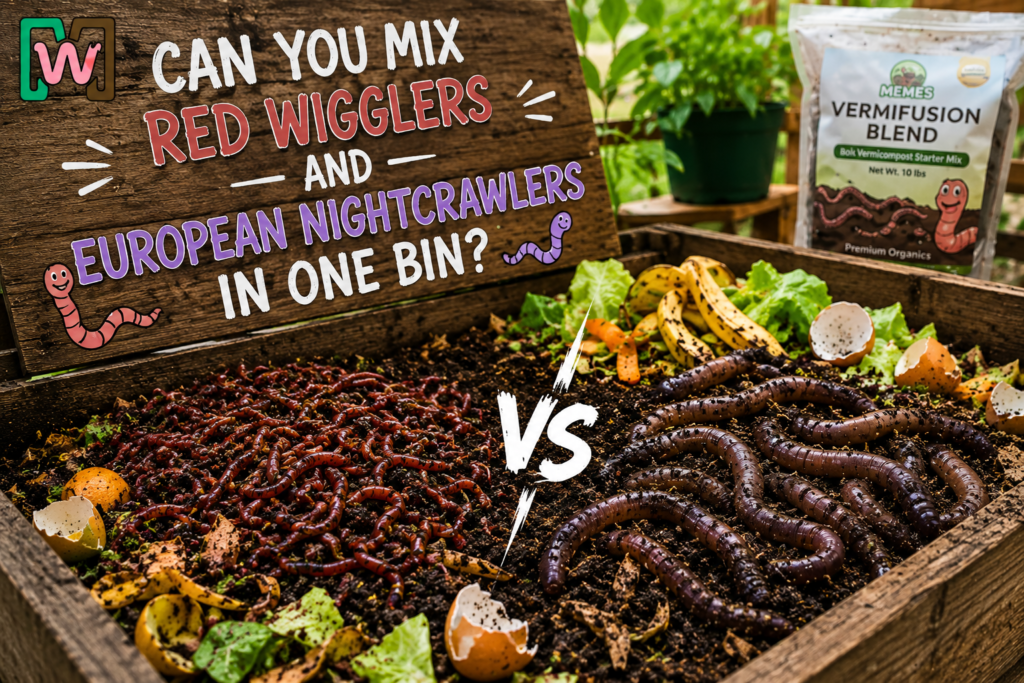
I get this question all the time from fellow worm farmers and composting beginners alike. People see red wigglers and European nightcrawlers at the worm shop, they think, “Why not grab both?” and then they wonder if tossing them into the same bin is a good idea or a recipe for disaster.
So let me just say it upfront: yes, you can mix red wigglers and European nightcrawlers in one bin. But just because you can does not always mean you should. There is a lot more to the story, and I am going to walk you through all of it in plain, simple terms.
What Are Red Wigglers?
Red wigglers, known scientifically as Eisenia fetida, are the superstar composting worms. They are small, striped, and absolutely amazing at breaking down kitchen scraps. I have been raising them for years, and they never fail to impress me.
They live near the top layer of the bin, right where food scraps are added.
They reproduce fast. Under the right conditions, they can reach maturity in just 21 to 30 days.
They thrive in temperatures between 18 degrees Celsius and 28 degrees Celsius.
They can live up to 5 years.
They turn organic waste into rich worm castings, also called vermicompost, faster than most other worm species.
At Mimis Worms, our red wigglers are raised with care so that when they arrive at your door, they are healthy, active, and ready to go to work in your bin.
What Are European Nightcrawlers?
European nightcrawlers go by the scientific name Eisenia hortensis. They are bigger and chunkier than red wigglers, and they have a totally different personality when it comes to composting.
They are excellent at aerating the lower layers of a worm bin.
I think of European nightcrawlers as the quiet workers. They do not rush, but they do thorough, deep work that red wigglers simply cannot do on their own.
Can You Actually Mix Them? Here Is the Truth
The short answer is yes. European nightcrawlers and red wigglers can be combined in the same bin. Some people actually like having both species in the same system since the Europeans tend to go down where the moisture content is higher, while the red wigglers remain near the top, which means the entire contents of the bin end up getting vermi-processed.
They barely interact with each other. Red wigglers hang near the top, chomping through food scraps, while Europeans work deeper through bedding and soil. Together, they can literally cover more ground. The only catch is space.
So from a pure cohabitation standpoint, these two species are compatible. They do not fight. They do not stress each other out. They just occupy different zones in the bin and do their own thing.
The Real Challenges of Mixing These Two Species
Here is where I have to be honest with you, because I have seen people run into problems. Mixing red wigglers and European nightcrawlers is not without its complications.
1. Red Wigglers Reproduce Much Faster
Since red wigglers are much more prolific in reproduction, at room temperature you will very quickly have a bin dominated by red wigglers. If you want to understand just how fast this happens, check out how fast red wigglers reproduce. The European nightcrawlers will still grow, but worms cannot cross breed and can only breed with their own species. So with more red wigglers around, it lowers the chances of European nightcrawlers finding a mate to breed. A dominance of red wigglers also means competition for resources.
In my experience, if you want your European nightcrawlers to actually thrive and multiply, a shared bin is not their best environment.
2. Temperature Preferences Are Different
European nightcrawlers generally enjoy slightly cooler temperatures than red wigglers find ideal. This means you will always be trying to find a middle ground that works for both, and neither species will be operating at its absolute best.
3. Separating Them Later Is a Headache
The concern about it being a pain to separate them later is definitely valid. Your customers will almost certainly end up with both worms no matter how careful you are, since there are also cocoons to consider, and you will end up spending more time on harvesting than you really need to be.
If you plan to sell your worms or use them separately for fishing bait, keeping them in the same bin is going to make your life very complicated down the road.
4. Space Requirements
You need enough depth, at least 10 or more inches, and a good food supply for this combination to work well. Many gardeners report excellent results with this setup for balanced speed and aeration.
A small bin is not going to cut it. Both species need enough room to occupy their preferred zones without crowding each other out. Make sure you prepare your worm bin correctly before introducing either species.
When Mixing Them Makes Sense
I do not want to scare you off the idea entirely, because there are real situations where mixing red wigglers and European nightcrawlers works beautifully.
Mix them if you are:
Running a large garden compost system where full processing of waste is the goal.
Not planning to separate or sell the worms later.
Focused on soil enrichment rather than worm population growth.
Setting up a deeper bin with at least 10 inches of bedding material.
Living in a region with moderate temperatures that suit both species.
By bringing these two worm species together in your composting bin, you are combining their powers for a more efficient and effective composting system. Red worms rapidly digest organic waste into nutrient-packed castings, while European nightcrawlers handle aeration and drainage through their deep burrowing.
When You Should Keep Them Separate
There are also situations where I strongly recommend giving each species its own home.
Keep them separate if you are:
Raising worms to sell. Euros are worth more per pound and you want them healthy and easy to sort.
Planning to use European nightcrawlers as fishing bait, since you want large, robust worms.
Running a smaller bin where space is limited.
Focused on maximizing the European nightcrawler population.
Experts generally recommend keeping the two species separated, at least as advice for those planning to sell the worms later on. If you do decide to try mixing them, it is a good idea to also keep some bins for each species on its own just in case.
How to Set Up a Mixed Bin the Right Way
If you have decided you want to go ahead and mix them, here is how to do it properly:
Step 1: Choose a Large, Deep Bin You need a bin that is at least 10 to 12 inches deep. Flow-through bins and stacking tray systems work well here. If you are brand new to this, our step-by-step post on how to make a worm bed walks you through the whole process.
Step 2: Prepare Proper Bedding Use a mix of shredded cardboard, coconut coir, and aged compost. European nightcrawlers love a looser, deeper bedding layer.
Step 3: Manage Moisture Carefully Keep the lower portion of the bin slightly more moist to encourage European nightcrawlers to settle deeper. Red wigglers will naturally stay near the top.
Step 4: Feed Consistently Both species eat fruit scraps, vegetable peels, coffee grounds, and crushed eggshells. Feed in one area at a time and let both species work through it.
Step 5: Monitor Temperatures Aim for a temperature between 18 and 24 degrees Celsius. This range is comfortable for both species, though not the absolute ideal for either. Keep an eye out for the signs your worms are healthy so you can catch any problems early.
Step 6: Accept That Red Wigglers May Dominate Over time, the red wiggler population will grow faster. This is normal. If you want to maintain a healthy European nightcrawler population, you may need to remove some red wigglers periodically.
Relevant Products from Mimis Worms
If you are ready to start your mixed bin or want to raise each species on its own, here are some products from Mimis Worms that I personally recommend. Visit our shop to see everything available, or browse our bundles for the best value:
Live Red Wigglers – Our healthy, active red wigglers are perfect for fast composting and beginners getting started with vermicomposting.
Live European Nightcrawlers – Great for deeper composting systems, garden beds, and fishing bait. These are larger, robust worms raised with care.
Mixed Worm Starter Pack – A great option if you want to experiment with a mixed bin. Comes with both species in a balanced starting ratio.
Coconut Coir Bedding Blocks – The best bedding material for a mixed bin. Holds moisture well and gives European nightcrawlers the loose, deep environment they love.
Worm Bin Starter Kit – A deep, flow-through bin that gives both species the space they need to thrive in the same system.
Quick Comparison: Red Wigglers vs. European Nightcrawlers
Feature
Red Wigglers
European Nightcrawlers
Scientific Name
Eisenia fetida
Eisenia hortensis
Size
Small
Medium to Large
Bin Zone
Top layer
Deeper layers
Reproduction Speed
Very fast
Slower
Ideal Temperature
18 to 28 C
Slightly cooler
Best For
Fast composting
Aeration, fishing bait
Can Mix Together?
Yes
Yes
Final Thoughts from Samantha
I have kept red wigglers and European nightcrawlers both separately and together over the years. Here is my honest take: if your goal is maximum compost output and you have a large, deep bin, mixing them can work wonderfully. You get faster surface processing from the red wigglers and deep aeration from the Europeans.
But if you want to raise healthy populations of both species, keep them separate. Your European nightcrawlers will thank you for it.
At Mimis Worms, we carry both species and everything you need to set up the perfect bin. Whether you go mixed or separate, the most important thing is that you start. Worm composting is one of the most rewarding things I have ever done for my garden, and I know it will be for you too. If you want to keep learning, check out all of our tips on the blogs page or read more about Samantha Flowers and why she started this journey.
Happy worm farming.
– Samantha Flowers, Mimis Worms
Frequently Asked Questions
Q1: Will red wigglers and European nightcrawlers fight or harm each other?
No, they will not fight or harm each other. These two species are actually closely related, and they naturally occupy different zones in the bin. Red wigglers stay near the surface while European nightcrawlers go deeper. They simply coexist without conflict.
Q2: What will happen to my European nightcrawlers if I mix them with red wigglers?
Over time, the red wiggler population will grow much faster and may start to dominate the bin. European nightcrawlers will still survive and grow, but their ability to reproduce may be limited because of competition for food and mates. If you want a strong Euro population, a separate bin is the better choice.
Q3: How big does my bin need to be for a mixed setup?
Your bin needs to be at least 10 inches deep, though 12 inches or more is even better. This depth allows European nightcrawlers to burrow into their preferred zone while red wigglers work in the upper layers. A larger surface area also helps reduce competition for food.
Q4: Can I use both types of worm castings the same way in my garden?
Yes, the castings from both red wigglers and European nightcrawlers are excellent soil amendments. Both produce rich, nutrient-dense vermicompost that improves soil structure, feeds beneficial microbes, and supports healthy plant growth. In a mixed bin, you get the benefit of both.
Q5: Is it worth buying both species, or should I just pick one?
For most beginners, I recommend starting with red wigglers only. They are easier to manage, reproduce faster, and adapt well to indoor bins. Once you are comfortable with vermicomposting, you can experiment with European nightcrawlers in a separate bin or try a mixed setup in a larger outdoor system.
When looking for Fishing Bait – Pure European Nightcrawlers, why choose us? Our owner answers your questions (really)! Call Meme directly at 229-507-0203. Oh, and Our Georgia-based facility produces premium European Nightcrawlers for soil and fishing use nationwide.
European Nightcrawlers (Eisenia hortensis) are larger composting worms ideal for processing organic waste in home or commercial composting systems. These active and resilient organisms adapt well to diverse composting environments, helping to create nutrient-rich soil amendment efficiently. FOR FISHING SIZE WORMS ORDER THE EURO'S FOR FISH BAIT SIZE.
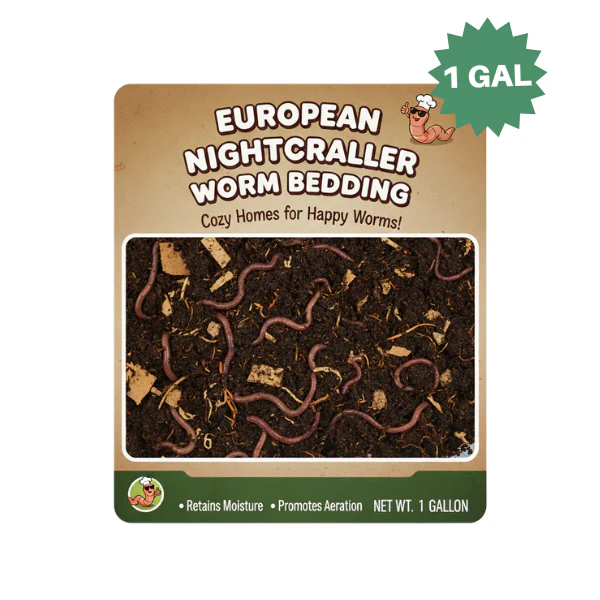
Give your European Nightcrawlers the perfect start with Meme’s Worms European Nightcrawler Bedding. Specially formulated for Euros, this pre-made bedding eliminates all the guesswork in worm care. There’s no need to add food scraps or extra ingredients—just place your worms directly into the bedding and let them thrive.
European Nightcrawlers (Eisenia hortensis) are larger composting worms ideal for processing organic waste in home or commercial composting systems. These active and resilient organisms adapt well to diverse composting environments, helping to create nutrient-rich soil amendment efficiently. FOR FISHING SIZE WORMS ORDER THE EURO'S FOR FISH BAIT SIZE.
Need a large supply of European Nightcrawlers? Buying in bulk is the most efficient way to expand your composting system and enhance soil health naturally.
Transform your food scraps and yard waste into rich, organic compost with Red Wiggler Composting Worms – Eisenia Andrei for Vermicomposting, Soil Health, and Organic Gardening. ALSO KNOWN AS CALIFORNIA RED Composting WORMS. These hardworking worms are nature’s composters, ideal for converting organic matter into nutrient-dense worm castings (also known as black gold). Perfect for home composters, gardeners, educators, and eco-conscious households.
What to expect when buying Red Wigglers in Living Material: You’ll receive a 10×8×6 box containing a balanced composting blend of Eisenia andrei composting worms, nutrient-rich castings, and naturally active material (including cocoons and beneficial microbes).
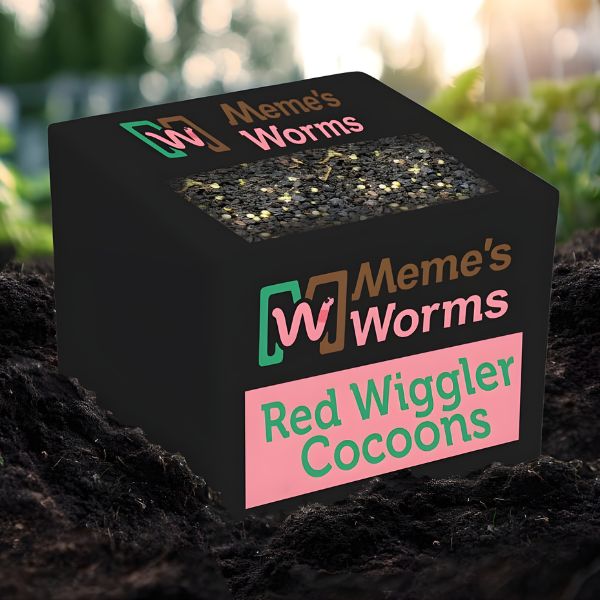
Our Worm Cocoons (Eisenia fetida) are a simple, reliable, and eco-friendly way to start or expand your composting setup. Each order includes cocoons embedded in rich, biologically active material to preserve freshness and composting potential during transport.
Samantha Flowers
Hi, I’m Samantha aka Meme, founder of Meme’s Worms, a commercial worm farm based in Valdosta, Georgia. I’m a hands-on worm farmer, educator, and business owner who has spent years raising, harvesting, and shipping Red Wigglers, European Nightcrawlers, and composting worms to gardeners, homesteaders, educators, and commercial growers across the United States. Everything I teach and write about here is based on real-world experience, not theory. View More