Table of Contents
If you keep worms, you eventually ask the same questions: how worms breathe, do worms need air, and how moisture affects their survival.
Worms do not breathe like humans or animals with lungs. They rely on a delicate balance between moisture and oxygen in their environment. When that balance is off, worm behavior changes fast.
Understanding how worms sense moisture and air removes a huge amount of confusion for bin owners. It explains wall climbing, clumping, slow feeding, odors, and sudden die-offs.
This guide explains how worms breathe, why moisture balance matters, how oxygen moves through a bin, and how to spot problems before they turn into losses.
How Worms Breathe
To understand how worms breathe, you need to forget everything you know about lungs.
Worms breathe entirely through their skin. Oxygen passes directly through the moist outer surface of the worm and into their bloodstream. At the same time, carbon dioxide exits through that same surface.
This process is called cutaneous respiration. It only works if the worm’s skin stays moist and exposed to oxygen.
If the skin dries out, oxygen cannot pass through.
If the environment becomes waterlogged and lacks air, oxygen cannot reach the skin.
That is why moisture and air are inseparable when talking about worm health.
Worms Breathing Through Skin Requires Moisture
Worms breathing through skin is not optional. It is their only method of respiration.
Moisture allows gases to dissolve and move across the worm’s skin. Without moisture, oxygen exchange slows or stops entirely.
This is why dry bins are dangerous. Even if food is present, worms can suffocate if their skin dries out.
At the same time, excess moisture creates its own problems. When bedding becomes saturated, water fills the air spaces that normally hold oxygen. Worms can suffocate even while surrounded by water.
This balance is why moisture management is one of the most important skills in worm care.
Do Worms Need Air
Yes, worms need air as much as they need moisture.
Oxygen must be present in the tiny air pockets throughout the bedding. Worms rely on these oxygen-rich spaces to breathe through their skin.
When bins become compacted or waterlogged, oxygen levels drop. This creates anaerobic conditions, meaning oxygen is absent or extremely limited.
Anaerobic bins cause:
- Strong, sour, or rotten smells
- Worms crawling up walls or lids
- Worms clustering tightly in small areas
- Reduced feeding and reproduction
These are not random behaviors. They are survival responses.
Must Read : Why Worms Live in the Dark (And Why Light Stresses Them)
How Worms Sense Moisture Levels
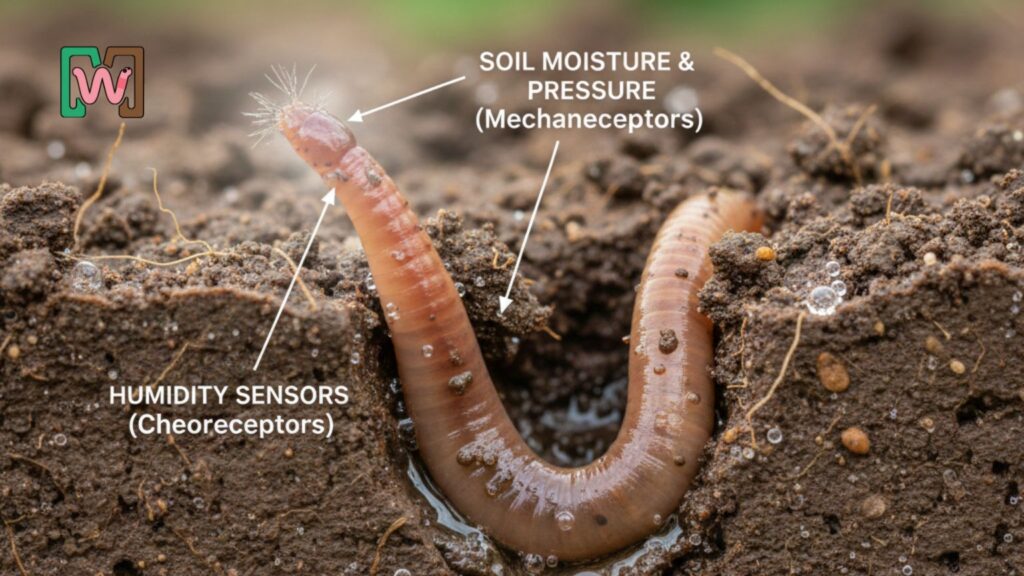
Worms are extremely sensitive to moisture changes.
Their skin contains nerve endings that detect hydration levels in their surroundings. When bedding becomes too dry or too wet, worms react immediately.
Moisture tells worms:
- Whether oxygen exchange is possible
- Whether the environment is safe
- Whether microbes can survive
Worms move constantly to maintain the correct moisture balance around their bodies.
What Proper Worm Moisture Balance Looks Like
Worms moisture balance is best described as damp, not wet.
Healthy bedding should feel like a wrung-out sponge. It should hold moisture without dripping water when squeezed.
In a balanced bin:
- Worms spread evenly through bedding
- Worms gather loosely around food zones
- Bedding stays fluffy and breathable
- Odors are minimal or nonexistent
This environment supports oxygen flow and skin respiration at the same time.
Signs Bedding Is Too Dry
Dry conditions disrupt how worms breathe.
Signs of dryness include:
- Worms clumping tightly together
- Worms staying deep in bedding
- Reduced movement and feeding
- Bedding that feels dusty or crunchy
When conditions are too dry, worms cluster to conserve moisture and reduce skin exposure.
If left uncorrected, dehydration can kill worms quickly.
Must Read : Worm Behavior Basics: How Worms Sense Their Environment
Signs Bedding Is Too Wet
Excess moisture is one of the most common beginner mistakes.
Signs bedding is too wet include:
- Worms crawling up bin walls
- Worms gathering near the lid
- Strong ammonia or rotten smells
- Slimy, compacted bedding
In wet bins, oxygen cannot move through bedding. Worms flee upward searching for air.
This behavior is often mistaken for escape attempts when it is actually suffocation avoidance.
How Food Affects Moisture and Air
Food plays a major role in worms moisture balance.
Food scraps release water as they break down. High-water foods can flood a bin without obvious warning.
Overfeeding causes:
- Rapid moisture buildup
- Bedding compaction
- Oxygen loss
- Increased microbial heat
This combination creates stress even if food quality is good.
Balancing food input with bedding volume is essential for proper airflow.
How Bedding Supports Airflow
Bedding is not just filler. It is the respiratory system of the bin.
Shredded cardboard, paper, and leaves create structure. That structure traps air pockets throughout the bin.
Good bedding:
- Prevents compaction
- Absorbs excess moisture
- Allows oxygen movement
- Supports microbial growth
Without enough bedding, bins collapse under their own moisture.
How Worms React When Air Is Limited
When oxygen drops, worms respond fast.
Common reactions include:
- Wall climbing
- Tight clumping
- Reduced feeding
- Sudden mass movement
These behaviors are early warning signs. They appear long before worms begin dying.
Ignoring them often leads to complete bin failure.
How to Improve Airflow in a Worm Bin
Improving airflow does not require fans or complex systems.
Simple steps include:
- Adding dry bedding regularly
- Fluffing compacted areas
- Reducing feeding volume
- Draining excess liquid
- Avoiding fine, muddy materials
Airflow improves naturally when moisture and structure are balanced.
Why Smell Is a Breathing Problem
Bad smells are almost always an air problem.
Healthy bins smell earthy.
Sour, sulfur, or ammonia smells indicate anaerobic conditions. This means oxygen is absent and harmful microbes have taken over.
Worms struggle to breathe in these environments.
Fixing smell means restoring airflow, not adding more food or masking odors.
Why Understanding How Worms Breathe Matters
Knowing how worms breathe changes how you manage a bin.
Instead of guessing, you start watching moisture, airflow, and structure.
You stop reacting to symptoms and start preventing them.
Worm behavior becomes predictable because their needs are simple.
Final Thoughts on How Worms Sense Moisture and Air
Worms survive through a constant balance of moisture and oxygen.
They breathe through their skin, which requires damp conditions and access to air.
Too dry and they dehydrate.
Too wet and they suffocate.
When you understand how worms sense moisture and air, their behavior stops being confusing.
Get the balance right, and worms stay buried, active, and healthy with very little effort.

Samantha Flowers
Hi, I’m Samantha aka Meme, founder of Meme’s Worms, a commercial worm farm based in Valdosta, Georgia. I’m a hands-on worm farmer, educator, and business owner who has spent years raising, harvesting, and shipping Red Wigglers, European Nightcrawlers, and composting worms to gardeners, homesteaders, educators, and commercial growers across the United States. Everything I teach and write about here is based on real-world experience, not theory. View More